Arts and Humanities
Blogs
10 Min Read
The Living Classroom of Mount St. Helens
Ralf Wiegand
Pubished - October 02, 2026

MSHI is grateful to photographer and volunteer Ralf Wiegand for these reflections on his first-hand experience of our programs!
At Mount St. Helens, education does not happen only inside a classroom. It happens on the trail, in old-growth forest, around maps and tables at the Science and Learning Center, and in quiet field moments when people learn to look closely.
The Mount St. Helens Institute (MSHI) turns the volcano and surrounding landscape into a living classroom. The photographs in this write up show that mission in action: volunteers in red hats and shirts, staff in gray, families learning together, hikers listening on the trail, stewardship teams removing invasive plants, and ecology participants discovering the small life of the forest floor.
Hiking Steward Training: Volunteers as Interpreters

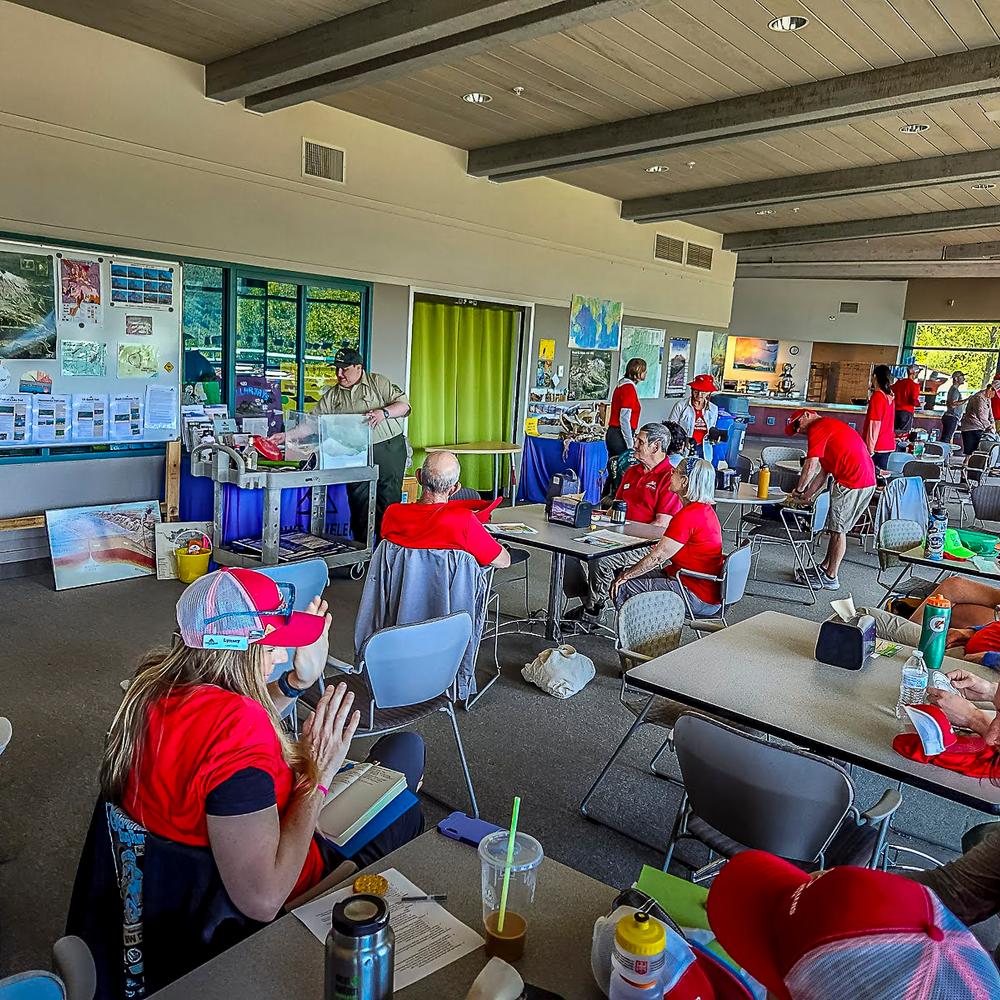
Hiking Steward training at the Science and Learning Center.

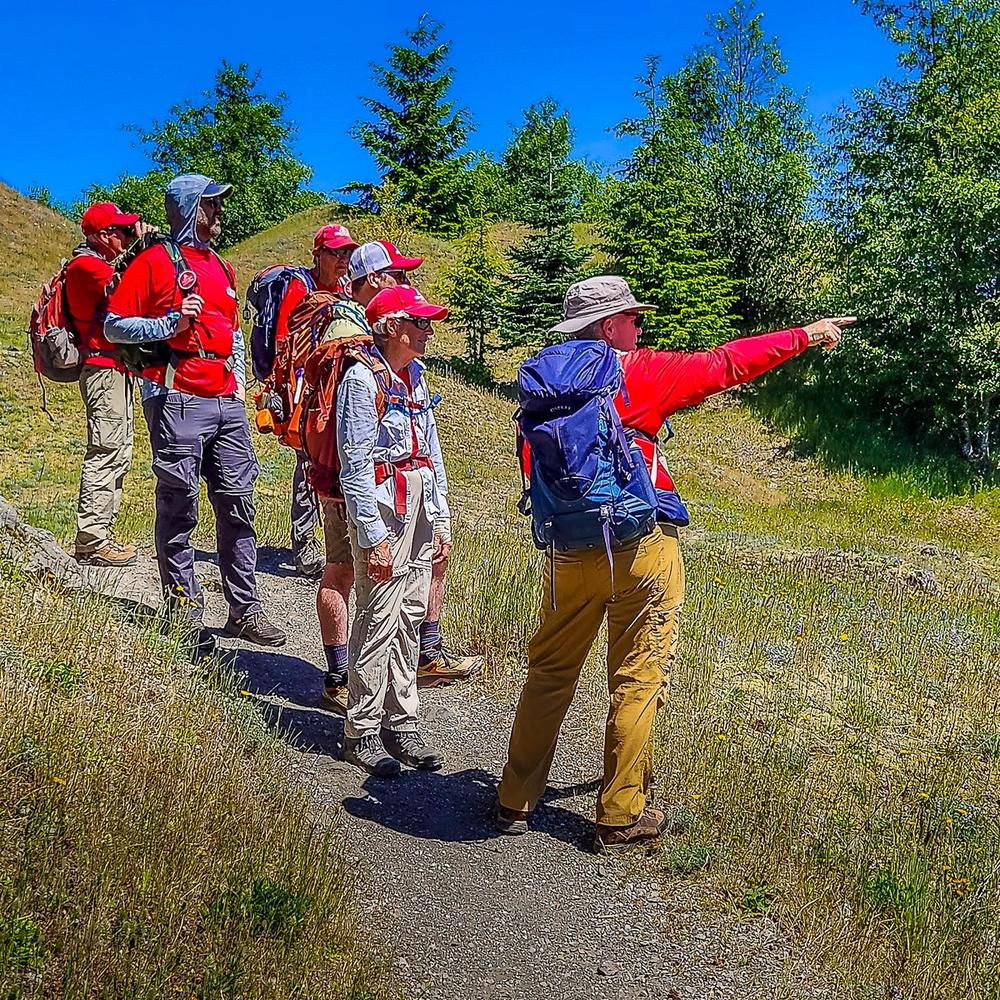
Volunteers practice field interpretation on trail.
Hiking Steward training prepares volunteers to support visitors, answer questions, encourage safe hiking, and share accurate interpretation. It is not only orientation; it is training in how to read a landscape and help others understand what they see.
A conversation may begin with a simple question about a trail, but the best interactions become more meaningful. Visitors learn why the blast zone looks different from the south-side forest, why staying on trail matters, how Spirit Lake has changed, or how the 1980 eruption shaped the landscape still visible today.
Family Adventure Camp: Learning Across Generations

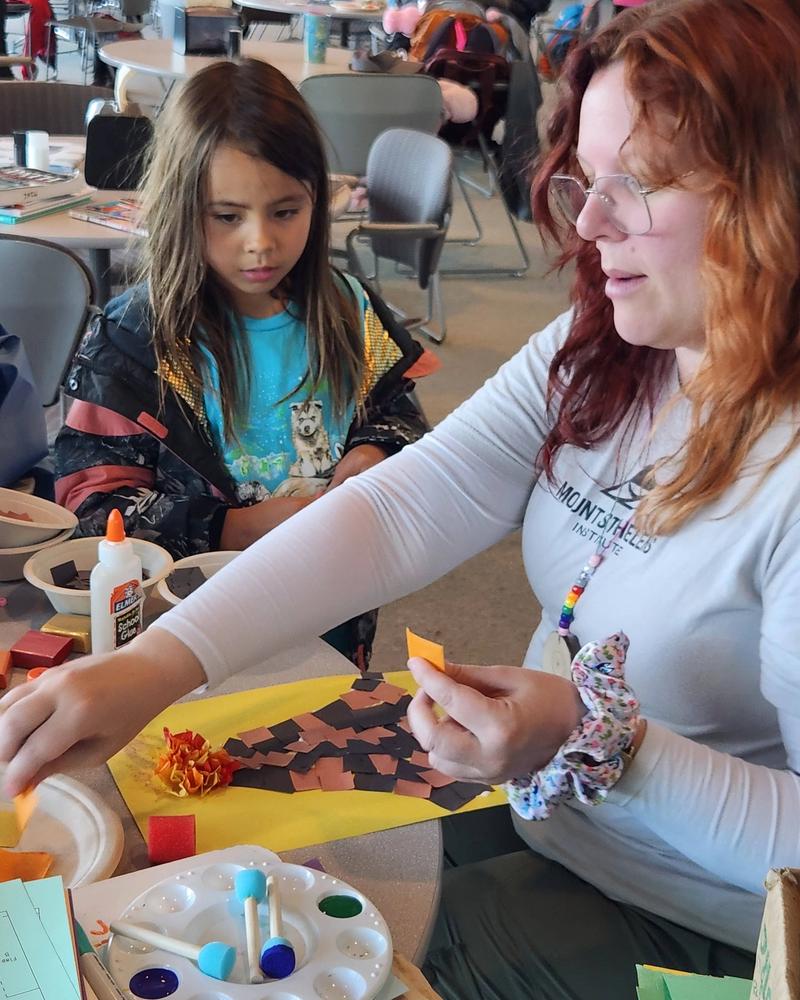
Family Adventure Camp: hands-on learning for young visitors and families.
Family Adventure Camp brings science to families through hands-on learning, art, conversation, and shared discovery. A child creating a volcano, observing materials, or asking questions is building emotional memory as well as knowledge. This matters because wonder is often the beginning of stewardship.
The Forest Ecology Hike: A New Living Classroom Offering

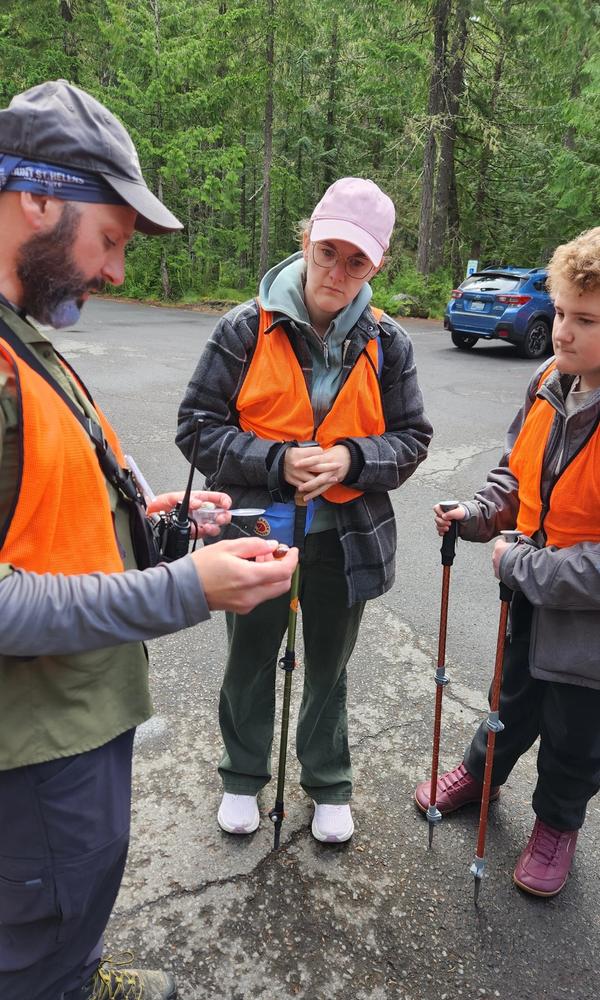
Ecology Hike briefing: tools, observation, and field curiosity.

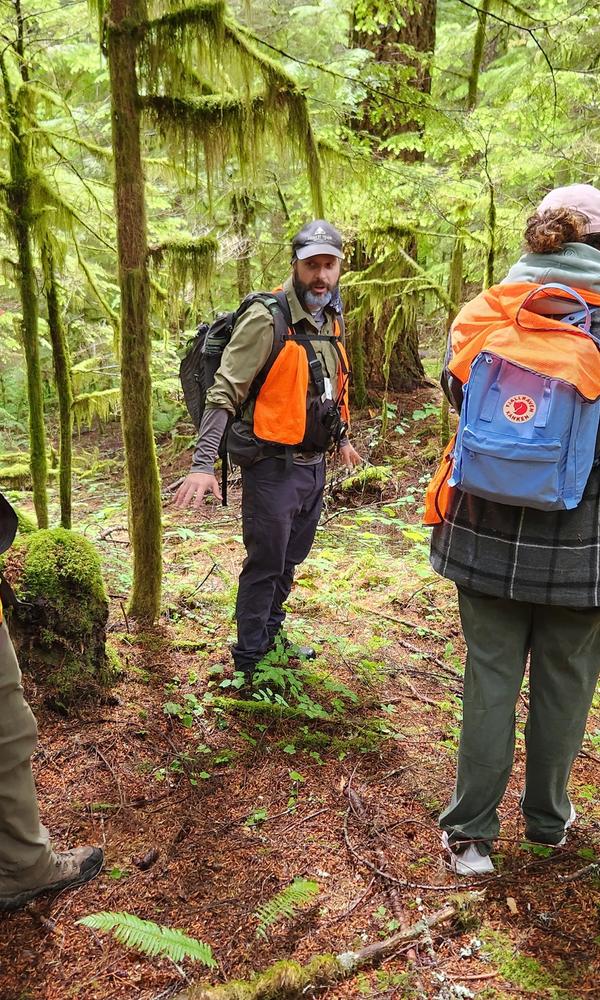
Old-growth forest as a living laboratory.

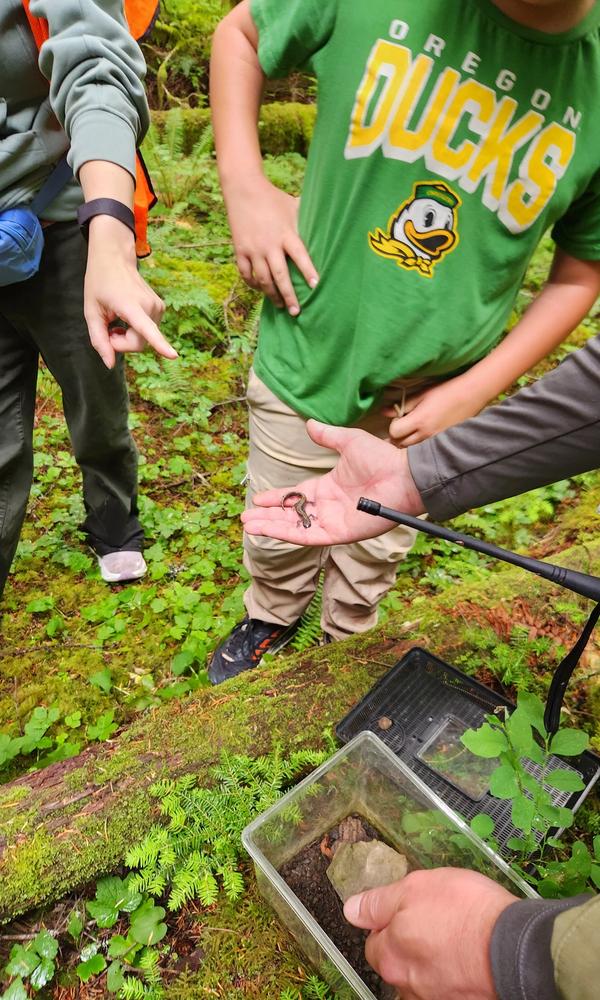
A salamander becomes evidence of moisture, cover, and habitat quality.

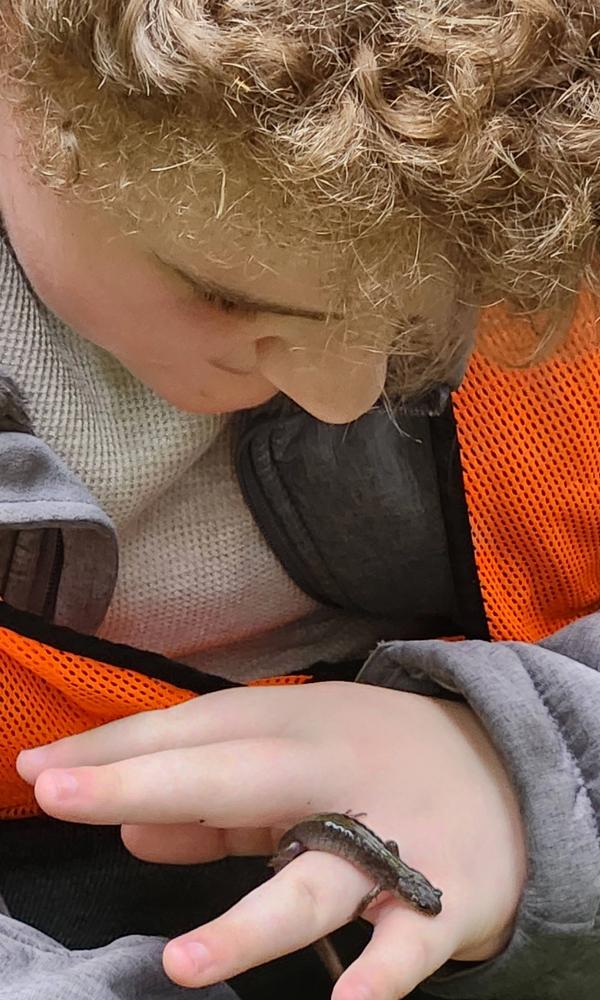
Small life, large lesson: close observation connects people to ecosystem health.
The Forest Ecology Hike is a new Mount St. Helens Institute offering for 2026: a four- to five-hour guided hike in old-growth forest on the south side of the volcano. Beginning near the Trail of Two Forests, staff and scientists guide participants beyond the easy surface view and into a deeper reading of forest life.
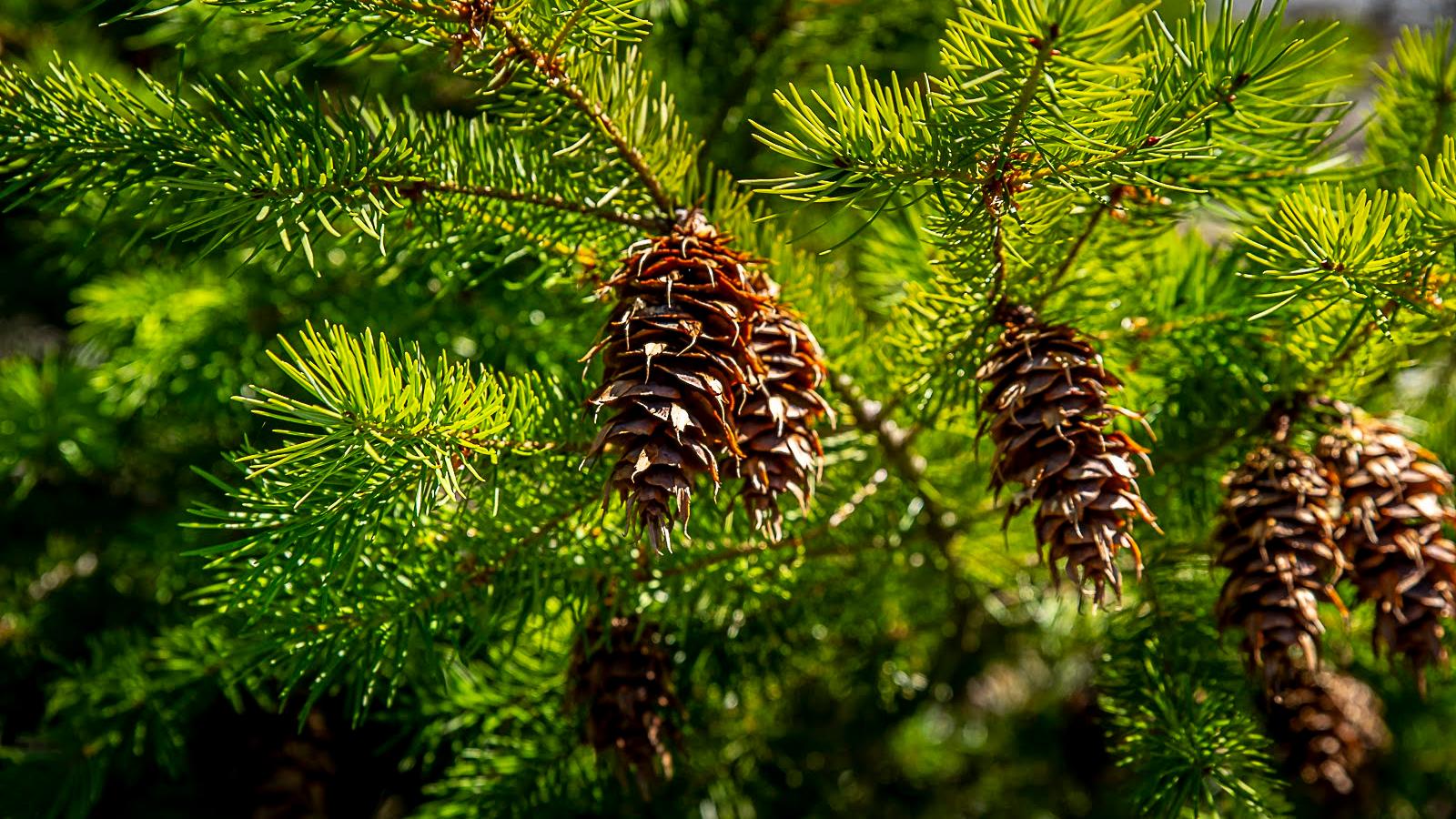
This hike is not simply a walk through trees. It is an investigation of a mature forest ecosystem from the ground upward: soil, duff, mosses, nurse logs, fungi, understory plants, standing dead wood, fallen trees, canopy gaps, and Douglas-fir ecosystems that may include trees roughly 200 to 400 years old.
What the Forest Teaches
In the old-growth forest, participants learn that dead trees and biological material are not waste. A fallen tree becomes a nursery. A rotting log becomes habitat. Moss holds moisture. Fungi and mushrooms return wood to soil. Slugs, salamanders, spiders, beetles, centipedes, millipedes, ants, mites, springtails, and other small organisms become part of decomposition, food webs, and renewal.
The salamander is a powerful teaching moment. It is not only a small animal; it is evidence of moisture, cover, shade, decaying wood, and habitat quality. When people see this life closely, the forest becomes less abstract. The ecosystem becomes a living network.
The contrast with the north side of Mount St. Helens is one of the most important lessons. The 1980 eruption created a young post-disturbance landscape where recovery has been unfolding for only about 46 years. The south-side old-growth forest represents a much older, more complex ecological condition. One side teaches how life returns after disturbance. The other teaches what centuries of growth, death, decay, and renewal can build.
Invasive Weed Pulling: Stewardship as Education

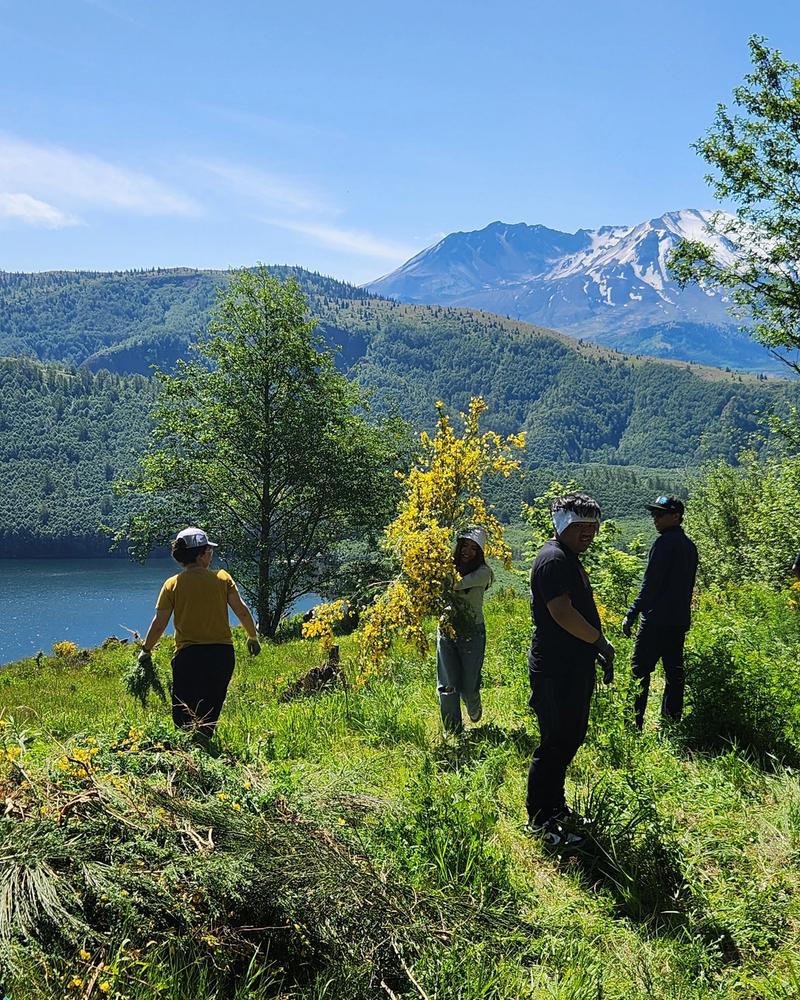
Stewardship in action: volunteers remove invasive plants with Mount St. Helens in view.
The image of invasive plant removal adds another essential piece: education is also action. Pulling noxious weeds teaches us that ecosystems are not protected by appreciation alone. They require care, monitoring, physical work, and community responsibility. A volunteer who helps restore a place sees that place differently afterward.
Why This Work Matters
The impact of the Mount St. Helens Institute is larger than any single hike, camp, training session, or work party. Together, these programs help people understand that Mount St. Helens is not a finished historic event. It is an active landscape, a research site, a place of recovery, a place of risk, and a place of wonder.
MSHI gives the public access to science in a way that is human, memorable, and field-based. A family learns through play. A steward learns how to engage a visitor. A hiker learns to read a slope, a log, a plant, or a lake differently. A child sees a salamander and understands that habitat is not just an idea on a page; it is alive in the hand, in the moss, and under the log.
This is the power of the living classroom. It moves people from visitor to observer, from observer to learner, from learner to steward, and from steward to witness. At Mount St. Helens, the lesson is still unfolding. Through education, research, volunteers, staff, families, and scientists, the message continues to move outward.
Curious to learn more about the MSHI programs mentioned? Learn more: