Learning Resources
Blogs
5 Min Read
Dendrochronology: The Study of Time and Climate Using a Tree’s Rings


Katie O'Dea
Pubished - July 24, 2026

At our Volcano Outdoor school, we take every opportunity to teach in depth about our landscape. In this case, for high school students soon to enter adulthood, we led a lesson on carbon sequestration. Carbon is an element that cycles through the environment naturally, with many ways to end up in the atmosphere quickly (any kind of combustion, including human/animal metabolism) and only one true way to be put back into the Earth quickly (photosynthesis, specifically in trees).

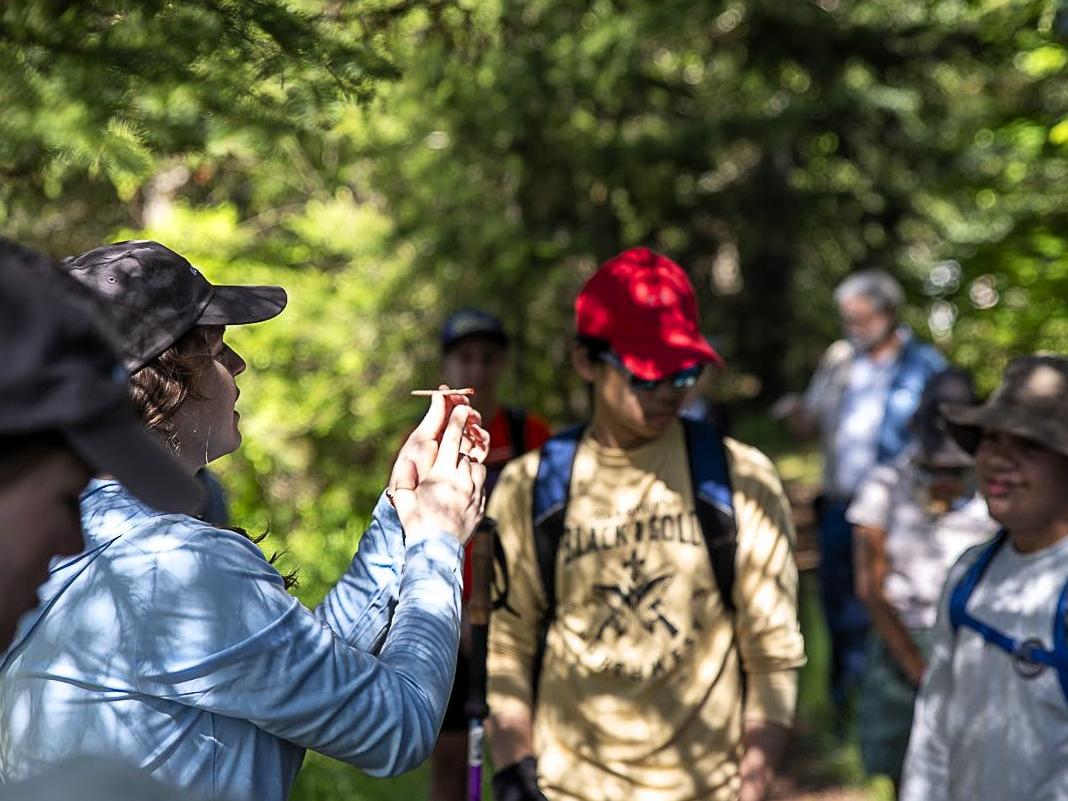
Students watch as MSHI instructor Katie O'Dea teaches about dendrochronology
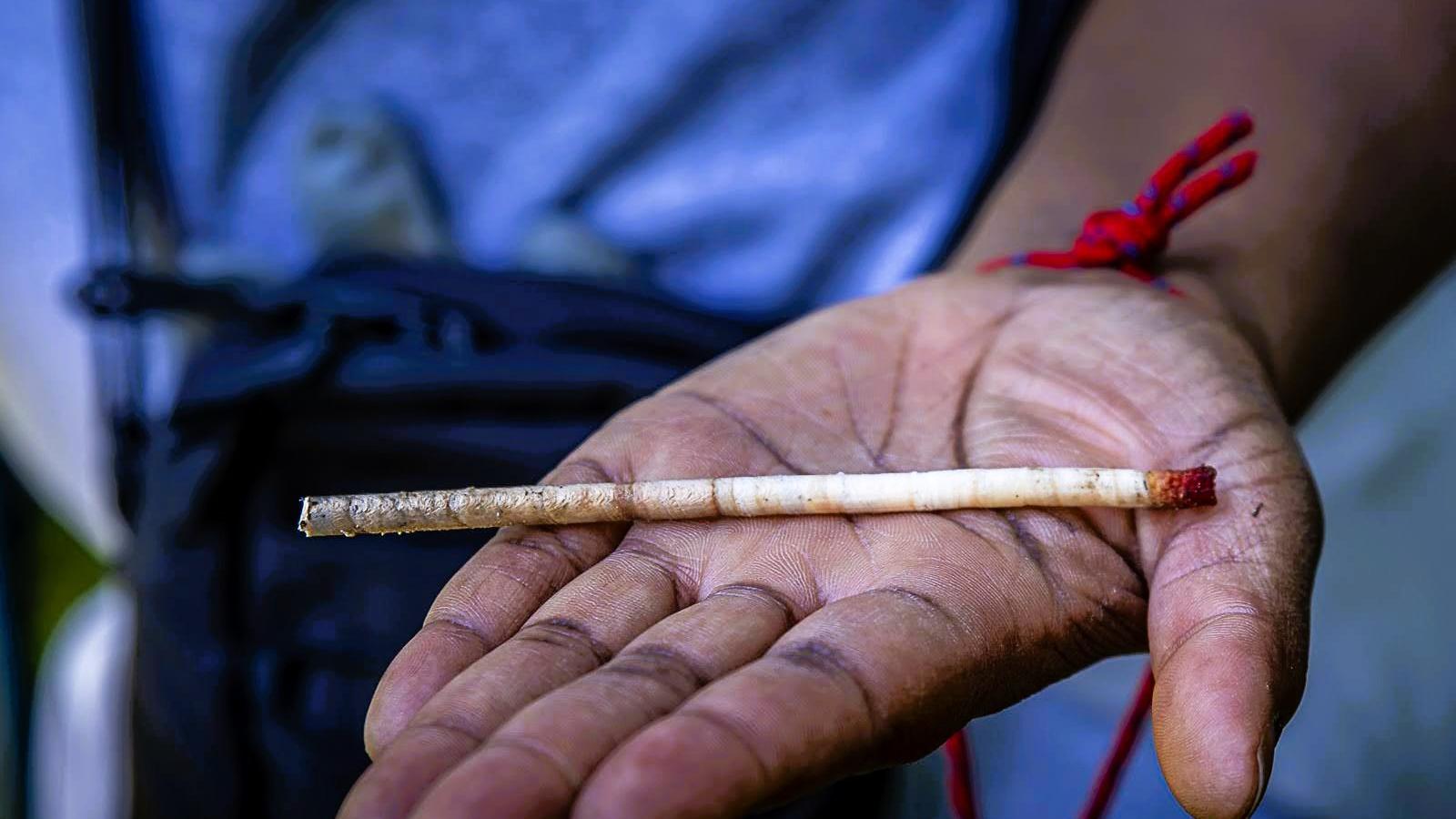
Our students took turns using an increment borer to core two trees. This tool extracts a thin straw of wood so scientists can study the rings without cutting the tree down. All plants get their weight and size from the carbon they remove from the atmosphere. Dark rings in a tree represent fall/winter dormancy growth, and the lighter wood in between shows summer/spring growth. Thicker summer/spring growth means the tree is storing carbon efficiently, while narrow rings means it is less efficient.

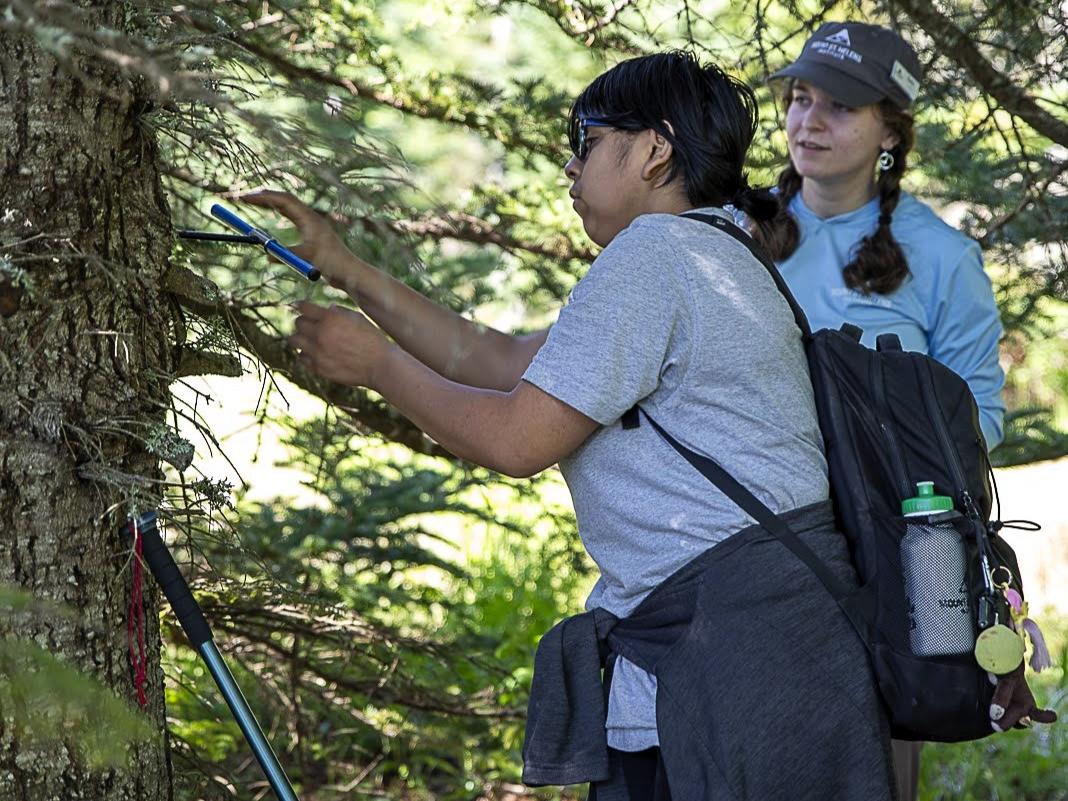
A student uses an increment borer to extract a core sample from a tree at Mount St. Helens
Luckily for us, the trees students cored had extremely thick spring/summer growth rings, which means they are taking in and storing away hundreds of pounds of atmospheric carbon per year! This ability is unique to young and middle growth forests like ours. After about 80-100 years, most tree species slow down their photosynthetic metabolism and focus more on maintaining their weight rather than actively growing. Climate scientists, like our students, use tree coring to make hypotheses about past climates, carbon storage, and how we can harness the power of forestry for a stable climate moving forward.


While old growth forests are a vital resource to protect for their cultural value and ability to act as large carbon banks, our 46 year old forest is in a unique phase of life where it is the most effective at removing carbon from the atmosphere, fast. This new forestry research is extremely valuable as the world continues to prioritize carbon-emitting fuel sources to provide electricity.


Activities like these introduce our students to using real-world forestry and ecology tools. In the face of heightening climate anxiety, learning about the real management strategies being developed and being invited to participate puts power back into the hands of younger generations. It also shows us how, despite the 1980 eruption that spread its damaging touch across the globe, Mount St. Helens and its surrounding forests have grown to a new phase of life that has the power to brush the skies with healing medicine, just as the Cowlitz people have told in their stories since time immemorial.