
Learning Resources
Blogs
6 Min Read
Endless Pressure, Endlessly Applied: Susan Saul Reflects on the Birth of the Mount St. Helens National Volcanic Monument

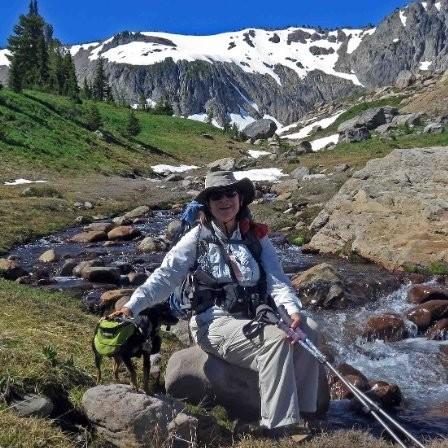
Susan Saul
Pubished - August 10, 2026

The Mount St. Helens Protective Association (MSHPA) was formed in 1970 by local community members who were concerned about logging, road-building, and mining around the mountain. When they reached out to the Sierra Club for help, Brock Evans (then the Northwest Director) replied that they should get organized. Brock coined the phrase "endless pressure, endlessly applied," which, 50 years later, remains the best advice for getting bills passed (or stopped) in Congress. The MSHPA published an initial proposal for a Mount St. Helens National Monument managed by the National Park Service, but it struggled to gain traction.
By 1976, the U.S. Forest Service (USFS) had begun developing watershed-based management plans. The Gifford Pinchot National Forest was split into several planning units, with the land surrounding Mount St. Helens placed in the Green-Spirit Planning Unit— bounded by the Lewis River to the south, Smith Creek to the east, and the Cispus River to the north. MSHPA took this opportunity to launch a retooled proposal for a Mount St. Helens National Scenic Area under USFS management.
Meanwhile, I had moved to Longview in 1974 for work and joined the Mount St. Helens Hiking Club. The club owned a lodge on Spirit Lake’s north shore, between the Scout and YMCA camps. Through the club, I explored the surrounding old-growth forest, backpacking into the Lakes Basin, hiking to Mount Margaret via a cross-country route up Margaret Creek, and spending some delightful weekends at the lodge. I would bring a mattress out onto the porch and sleep there with a view of Mount St. Helens. My biggest regret after the volcano erupted was not spending every possible moment of free time at the lodge.
In about the fall of 1977, I spotted a newspaper notice for an MSHPA public meeting and decided to go along. After learning about their proposal and meeting president Noel McRae alongside other leaders, I joined, recognizing that they needed help with public outreach. Joe Walicki—a Seattle-based grassroots organizer for The Wilderness Society who traveled the Pacific Northwest by Greyhound bus because he didn’t own a car—talked me into setting up a meeting with Congressman Don Bonker including representatives from MSHPA, the local Audubon chapter, and local Sierra Club members.
We met with Don and his district staffer, Arlie DeJarnatt, and made our pitch. Don was warm and receptive, but it was clear he wouldn’t act without significant public pressure. To build momentum, I came up with the idea of MSHPA hosting a series of guided hikes and other events around Mount St. Helens in the summer of 1980 to get more people out there on the ground (to hear our pitch.) We held our first hike on May 10, 1980, on the Green River Trail, having been assured by the USFS that the area was outside the Red Zone (as recounted in Steve Olsen’s book, Eruption: The Untold Story of Mount St. Helens.)

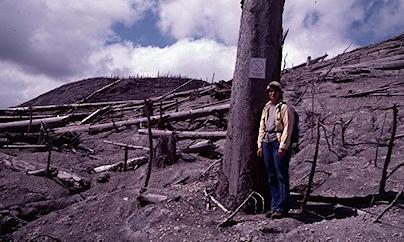
Susan at the Red Zone boundary two years later in July 1982
Just eight days later Mount St. Helens erupted, destroying the places we loved. Heartbroken, MSHPA member Russ Jolley couldn’t bear to look at photos and never returned to the area, pivoting his conservation efforts to the Columbia River Gorge and supporting Nancy Russell’s National Scenic Area campaign. Meanwhile, I received a call from Sierra Club folks up in Seattle including Charlie Raines (Brock Evans had since become Legislative Director for the National Audubon Society). About a month after the eruption, we set up a meeting in Longview to assess whether we still had a campaign or if everything worth protecting was gone.
With no direct access to the blast zone, we turned to the scientists going in to study the aftermath. We connected with Craig Weaver of the USGS at the University of Washington, alongside botanists and ecologists like A.B. Adams, Jerry Franklin, and Virgina Dale, among other scientists. Our big break came when the U.S. Army Corps of Engineers needed to build an emergency pumping station at Spirit Lake. Wanting to avoid litigation delays, they invited us on an Air National Guard helicopter tour out of Kelso Airport. They flew us around Spirit Lake and then dropped us off on a sandbar along the South Fork Toutle River (while they ferried another group), giving us the chance to talk to Don Bonker's legislative aide, who was also on our flight.

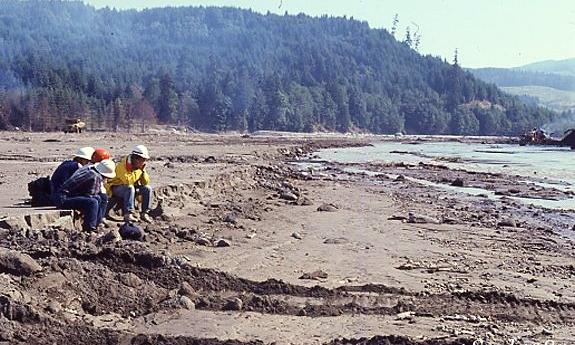
Conservationists including Harold Deery (Willapa Hills Audubon Society) and Polly Dyer (The Mountaineers) surveying the devastation with legislative aide Jim Van Norstrand on August 12, 1980
By fall 1980, we had compiled a list of unique geological and ecological features that we thought were worth protecting under a National Monument designation. We came up with a proposal for 216,000 acres encompassing both the eruption features and representative pre-eruption landscapes, allowing visitors to contrast and compare the old environment with the new. We held a press conference in January 1981 where we unveiled our proposal. That was like the opening bell, and quickly the USFS and the timber industry unveiled their unimaginative proposals. We spent the rest of 1981 building public support and lobbying Don Bonker every time he came through town. By that fall, Bonker was convinced that the Forest Service wouldn’t "do the right thing" without direction from Congress.

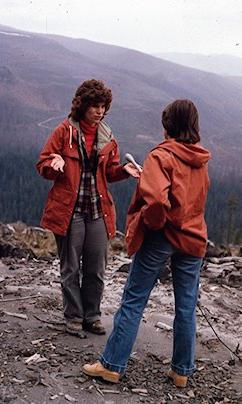
Susan Saul gives a TV interview on May 13, 1981

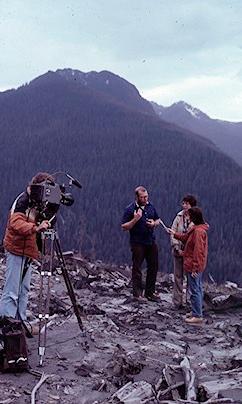
Mike and Lu Moore give a TV interview on May 13, 1981
The 1980 election had brought a new president to the White House (Ronald Reagan) and a new governor to Washington (John Spellman)—both Republicans but of very different persuasions. Reagan rode into the White House on the coattails of the Sagebrush Rebellion and was opposed to federal lands. Spellman was a moderate Republican who realized that Washington, then in an economic slump, needed to diversify beyond timber and agriculture. With inquiries pouring in from people around the world eager to see the volcano, Spellman recognized the economic potential of tourism.
The state launched a public engagement process, ultimately devising a proposal that blended elements from all those on the table. This state proposal served as the springboard for legislation introduced by Bonker in December 1981. The bill took off on a fast track: Congressional hearings were held in Washington, D.C. in March 1982, followed by field hearings in Kelso and Vancouver in June. House and Senate versions were reconciled in conference, ultimately passing both chambers almost unanimously. Yet a presidential veto loomed. The Reagan administration seized on $10 million in Green River valley mineral claims as justification to reject the legislation. It was a cliffhanger whether the bill would be signed.

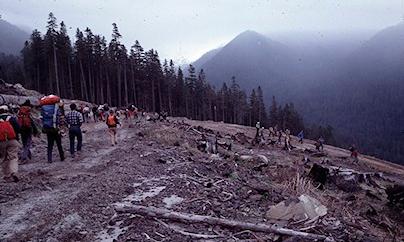
Hiking the Green River on the second anniversary of the May 18, 1980, eruption
The conference committee called Reagan's bluff and drew the monument boundary to exclude the mineral claims. With the bill still at an impasse, Governor Spellman reached out to Reagan as a fellow Republican to urge his approval. On August 26, 1982, Reagan reluctantly signed the bill without a ceremony—and the Mount St. Helens National Volcanic Monument was officially born.


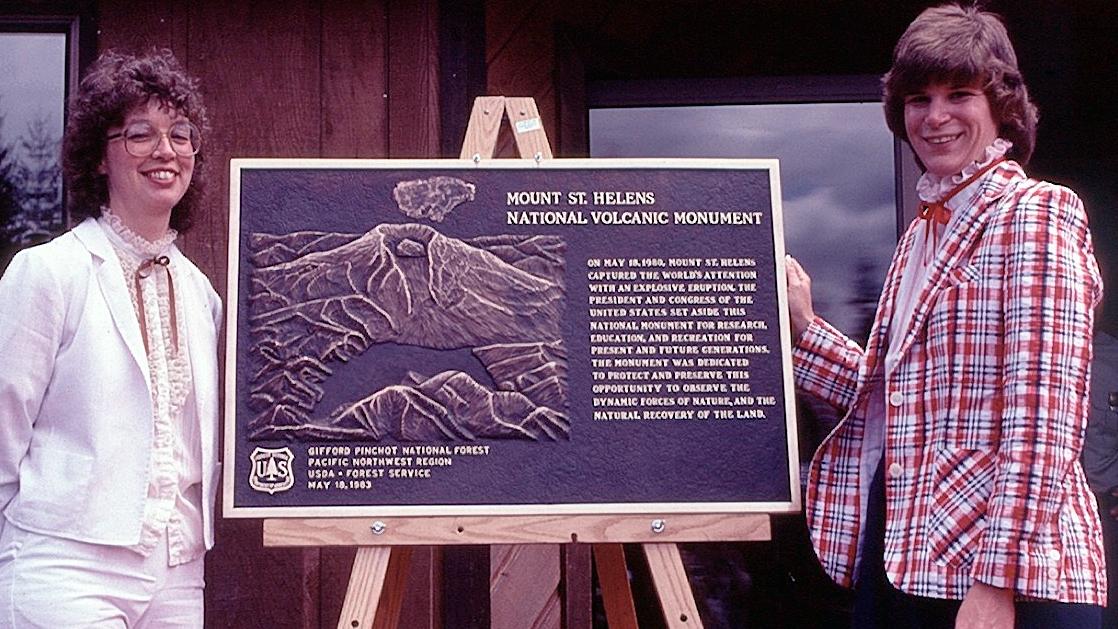
Lu Moore and Charlie Raines at the dedication ceremony on May 18, 1983
MSHI is grateful to Susan Saul for sharing her personal experience and photos of the campaign to establish the Mount St. Helens National Volcanic Monument.