
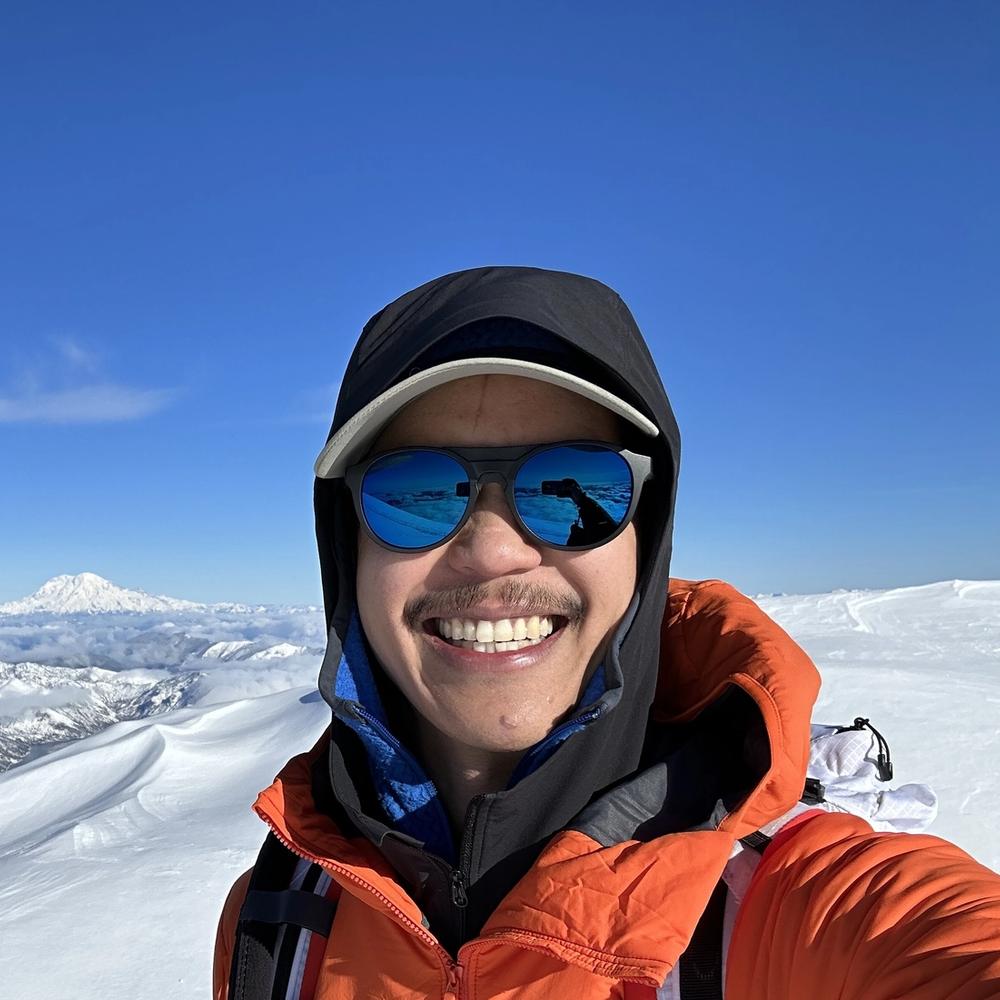


Recently, I had the privilege of completing the 2026 Alpine Ascents BIPOC Guide Development Program, which aims to promote knowledge transfer and provide access to mentorship and field training for aspiring guides from the BIPOC community – a historically underrepresented group in the outdoor professional space. The program began in 2023 and has since graduated three cohorts, with alumni returning to help mentor the subsequent participants. It is financially supported by Alpine Ascents, a renowned Seven Summits guide outfitter based in Seattle that operates on the highest peaks around the world. I had applied to this program every year since its inception and worked to build my climbing resume and certifications to be more competitive among the many folks that apply. Being selected as one of six members of the 2026 cohort is one of my proudest moments and represents a pinnacle achievement in both my professional career and personal life.


It should be noted that these days, diversity, equality, and inclusion (DEI) initiatives are losing support at all levels, and these types of opportunities are becoming rarer each year. The fact that Alpine Ascents maintains its BIPOC Guide Development Program is a powerful testament to the company’s belief in the value of diversity in the backcountry and is a product of an absolute force within the guiding and BIPOC outdoors communities: Mary Brown. Mary is the guided programs manager at Alpine Ascents, and while our job titles are the same, Mary manages an operation with over 100 active guides that operate around the world, from our backyard peaks like Kulshan (Mount Baker) and Tahoma (Mount Rainier) to Denali (Mount McKinley), Chomolungma (Mount Everest), and even Mount Vinson. She is a pillar of the guiding community and gives much of her time supporting DEI or BIPOC-focused initiatives in the outdoors space, and I must credit her for being a huge factor in supporting my own personal journey as a backcountry professional.
The BIPOC Guide Development Program not only provided technical training (focused on glacier guiding) but also dedicated time and direct access to a community of mentors committed to supporting our cohort's development towards a professional level of knowledge – whether our end goal is to guide professionally or otherwise. This investment carried no requirement of returning to work for Alpine Ascents, instead it is a commitment to supporting the BIPOC outdoors community as an expression of the core belief that the outdoors is for everyone and that diversity in the outdoors enriches the overall experience.
Our cohort met monthly through the summer for three multi-day training outings – the first at a climbing area near Seattle, the second a summit of the Easton Glacier route on Kulshan (Mount Baker), and the culmination of the program on Eldorado Peak in the North Cascades. These venues provided incredible terrain and a perfect environment for learning crevasse rescue skills, rope team guiding techniques, and sustained time in the backcountry mixed in with the intense physical activities of climbing around our home state.


The instruction was tailored to each cohort member’s learning style, and as a group we all supported each other as well – I am pleased to call the five other cohort members my friends after spending the summer together on mountains around Washington. To have found amazing backcountry partners at the “near-peer” skill level that is conducive to advancing technique and knowledge in folks that I would just as soon grab a coffee or hang out with at any opportunity is incredibly special. As a latecomer to the guiding world, I am easily 10-15 years older than the prospective guides that compete for the professional guiding opportunities each season, and I have been searching for a group of reliable friends to pursue these goals with for years. Connecting with folks that have shared the experience of being a minority in the backcountry contributed to a feeling of camaraderie and closeness that I have not found before in my life. These friends of mine have trusted me with their lives, and I trusted them with my own, and the bonds we forged in the mountains of Washington will be treasured for the rest of my life.


I am proud to have completed the 2026 Guide Development Program with my cohort and proud to have represented the Mount St. Helens Institute (MSHI) while among other professional guides. Our guide service has a different objective than many other professional guide outfitters, but there is much overlap in the core values of Alpine Ascents and MSHI. The Institute’s mission of advancing stewardship of the Earth is directly relevant to our goal of promoting inclusive and accessible adventures around the monument for all people who wish to experience the magic of Mount St. Helens. I am grateful to have found my way to MSHI and to carry the torch forward as we strive towards a brighter, more diverse future. I hope to complete an additional certification for guiding on glaciated terrain next year, and I hope to bring the knowledge I’ve gained (and the community I’m a part of now to promote diversity and access) to our MSHI guided programs!